


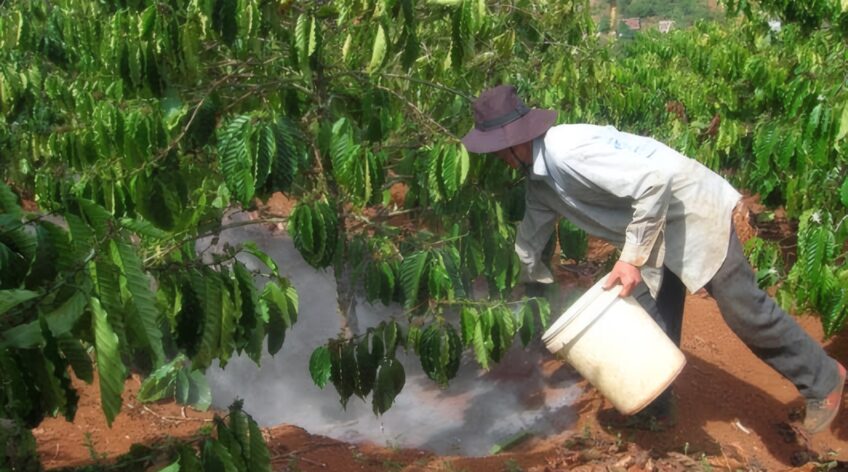
Fatal Mistakes Farmers Must Avoid When Fertilizing in the Dry Season
Why do my plants stay yellow despite heavy fertilization?, Why do leaves drop immediately after fertilizer application? These are frequent questions Nong Dien Phat’s technical department receives during heatwaves. Below are solutions to the 5 most common mistakes to help farmers avoid them this season.
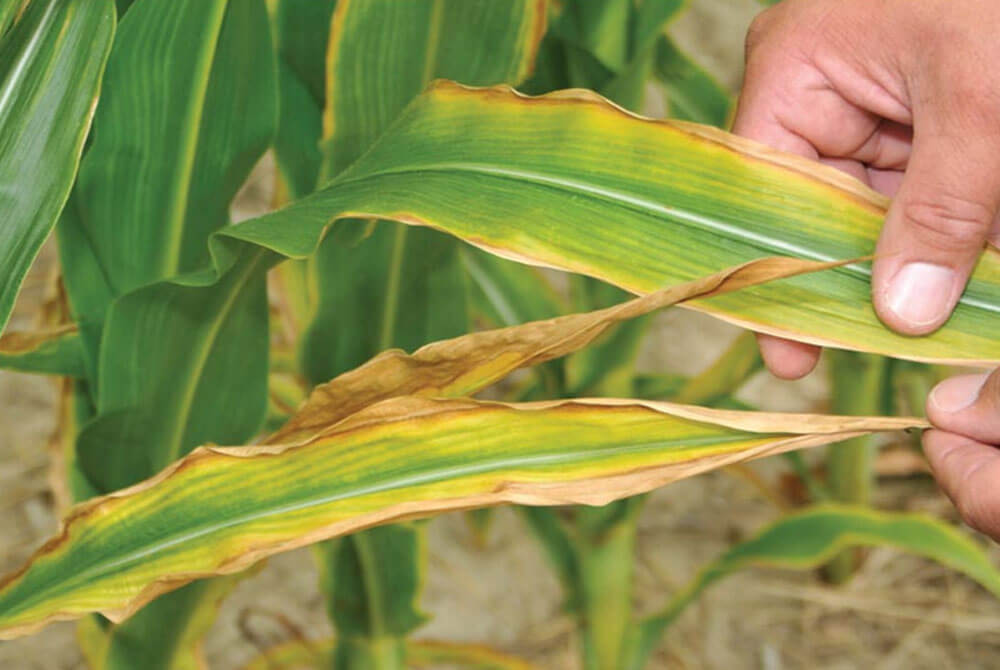
1. Should a lot of Nitrogen (Urea) be applied in the dry season to keep plants green?
Answer: This is a very dangerous misconception. In the dry season, the plant’s water transport capability is poor. If excess Nitrogen is applied, leaf cells become thin and retain too much water, making them highly susceptible to leaf burn (tip burn) under harsh sunlight. Furthermore, high Nitrogen levels attract pests.
Advice: In the dry season, increase Potassium and Calcium Boron to help harden cell walls, enhance drought tolerance, and prevent water loss.
2. Can Phosphorus be mixed with Calcium for a single convenient application?
Answer: No, you shouldn’t! When Phosphorus and Calcium meet at high concentrations, precipitation reactions easily occur (causing the fertilizer to clump, making nutrients unavailable to the plant).
Advice: Apply them 5-7 days apart. Alternatively, use Nong Dien Phat’s imported complex fertilizers, where components are processed with high technology to coexist stably within a single granule.
3. Is it unnecessary to water again (rinse) after applying fertilizer?
Answer: Many farmers let fertilizer stick to leaves without rinsing. Under the hot sun, the salt concentration in the fertilizer will immediately burn leaf surfaces and flowers.
Advice: Follow the principle: “Water before – Fertilize – Water again”. Ensure the soil is moist enough before fertilizing and rinse leaves clean after application.
4. How to distinguish officially imported fertilizers from floating (counterfeit) goods?
Answer: The fertilizer market is very chaotic. To avoid buying fake or poor-quality goods (which can kill roots), farmers need to check:
- Vietnamese Sub-label: Must include the importer’s name (e.g., Nong Dien Phat Co., Ltd.).
- Fertilizer Code: Clearly printed on the packaging.
- Packaging Specifications: Imported goods usually have sharp packaging printing, strong heat seals, and no leaks.
Do you have any other questions?
Every orchard and every soil type has its own unique characteristics. Don’t hesitate to take photos of your garden and send them via Zalo to Nong Dien Phat. Our team of engineers is always ready to consult for FREE!


